


Ottawa’s newly tabled Budget 2026 outlines more than $142 billion in new spending and tax measures, with major initiatives aimed largely at attracting business investment, addressing homelessness and supporting Canada’s cultural sector.
The federal government expects to post a deficit of $62.3 billion in the 2026-27 fiscal year, about $3 billion lower than projected in April’s spring economic update.
Higher federal revenues, largely tied to a spike in global energy costs, are expected to improve Ottawa’s fiscal position in the near term.
MP reaction
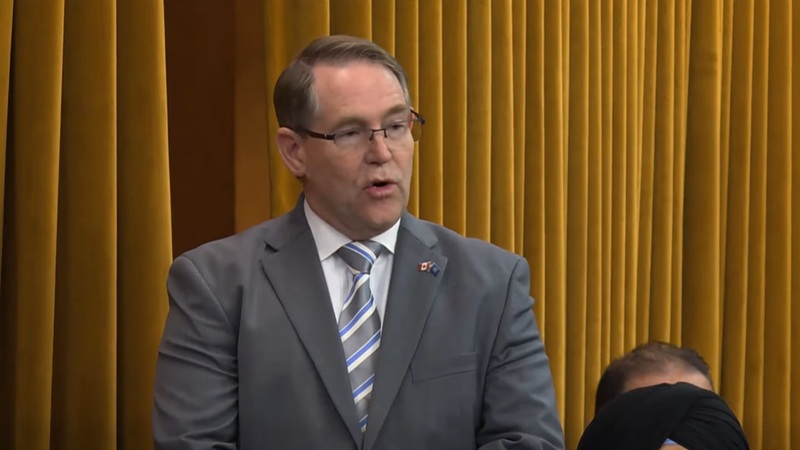
Yellowhead MP William Stevenson spent much of Thursday reviewing the budget and had mixed reviews.
He said the document placed considerable emphasis on large businesses and major projects. While those investments could benefit Canadians, he felt the budget lacked support for smaller enterprises, particularly the kinds of businesses typically found in Yellowhead.
While he was pleased to see support for large-scale energy projects such as the Pacific Link Pipeline, planned to run from Bruderheim, Alta., to Delta, B.C., he wants to see concrete action on the project rather than it becoming “just another announcement.”
–
RELATED
- Carney gives Alberta pipeline special interest designation, to be called Pacific Link
- Poilievre lays out demands ahead of budget
–
Stevenson also identified several benefits for rural Albertans.
For instance, the MP praised the government’s decision to expand capital gains transfer exemptions to include more family members, such as nieces and nephews.
The budget also proposes setting a single tax-filing deadline of May 15 for 2027 returns. This would move the deadline from April 30 for most people and June 15 for self-employed Canadians.
Stevenson supported the change, saying it would give people a couple more weeks to file their returns.
The budget also commits to extending the Canada Strong Pass for national parks in the riding for a third year. Stevenson said that while the pass has greatly increased tourism in Banff, there is not enough federal support for the area’s overwhelmed workforce.
While the budget includes targeted investments across the country, Stevenson said the approach amounts to picking winners and losers.
“Instead of broad-based tax relief measures that would help everybody throughout the country, they’re just picking certain areas where they want to help,” he said. “It doesn’t help us a whole lot in our area.”
Alberta finance minister’s reaction
Alberta Finance Minister Jason Nixon said Thursday he likes the federal budget on the surface.
He said the work his government has done to repair Alberta’s relationship with the federal government is paying off.
“This federal government is finally moving closer to what Alberta has tirelessly advocated for: a stronger economy and a competitive energy sector that underpins prosperity for all Canadians,” Nixon said in a statement provided by his office.
Nixon also said he was pleased to see three Alberta projects recognized in the budget as major projects, including the Pacific Link pipeline.
Expanded Groceries and Essentials Benefit
The Groceries and Essentials Benefit, a rebranded version of the GST credit, is one of the government’s key affordability measures.
The budget proposes a one-time top-up of 50 per cent to the benefit for the 2026-27 fiscal year. The payment is expected to be sent to families early next year.
A similar payment was issued in June.
According to the budget document, the additional money will increase the average benefit to $339 for a qualifying single person and $679 for a couple with two children. It will also increase the total annual benefit for a family to about $2,570.
The expanded program is expected to cost about $4.1 billion.
Help for food banks
The budget identifies food affordability as one of the biggest challenges facing many households.
Food banks across the country reported more than 2.3 million visits in March alone.
The budget proposes an additional $124 million over three years for the Local Food Infrastructure Fund, which helps food banks and similar organizations purchase food and invest in infrastructure.
The funding is set to begin in the 2027-28 fiscal year, which starts April 1.
A plan to end homelessness
The budget lays out an ambitious housing agenda that includes building more homes on federally owned land and ending homelessness within the next 10 years.
It proposes establishing an Integrated Supports Fund to provide transitional housing alongside mental health, addictions and other social supports for people experiencing homelessness.
The government plans to invest $1.8 billion over four years in the fund, with the goal of supplementing that amount with private, public and philanthropic contributions.
The budget also proposes a separate $2-billion fund over two years to build more crisis mental health and addictions facilities across Canada.
Plans also include investing billions of dollars in the Canada Housing Benefit over the next decade to help low-income Canadians cover their rent.
The budget says ending homelessness will require close collaboration with provinces, territories and municipalities.
Making banking fees easier to understand
The budget says the government plans to draft regulations requiring banks to provide customers with clear annual statements outlining the fees paid on their chequing and savings accounts.
The goal is to give Canadians the information they need to choose the banking option that best suits them and avoid unnecessary fees.
The government also plans to launch consultations on legislative changes that would direct credit card payments toward the portion of a balance carrying the highest interest rate.
The budget document notes that this practice is already in place in Quebec.
The proposed change is intended to help customers pay down credit card debt faster by directing payments toward their highest-interest balances first.
First Nations communities
The federal Liberals’ new budget commits $32 billion over 10 years to repairing, replacing and building First Nations infrastructure.
The investment is expected to make essential services more reliable and help communities retain skilled workers.
A significant infrastructure gap exists between First Nations communities and the rest of Canada. The Assembly of First Nations and the Conference Board estimate it would take about $375 billion to close that gap.
Many First Nations communities lack modern roads, schools and housing, have poor internet connectivity and rely on defective water treatment plants.
Budget 2026 by the numbers
Here are some key figures from the Liberal government’s 2026 budget:
- $142.1 billion: Total new spending and tax breaks included in Budget 2026.
- $62.3 billion: Projected deficit for 2026-27.
- $3 billion: How much lower Ottawa’s projected 2026-27 deficit is compared with the April spring economic update.
- 380,000: Target for permanent resident admissions per year in 2027, 2028 and 2029.
- 370,000: Target for new temporary resident admissions per year in 2027, 2028 and 2029.
- 200,000: Number of temporary residents already in Canada who could become permanent residents by the end of 2027.
- $50 billion: Investment in expanding Canada’s electricity grid.
- 55,000: Number of additional electric vehicle chargers Ottawa hopes to build by 2032.
- $1.2 billion: Amount the federal government says it will spend to extend funding agreements with provinces and territories for mental health and addictions services, as well as home and community care.
- $55.3 million: Proposed funding increase for Transport Canada over two years to advance digital trade processes and help businesses adopt new tools to improve their competitiveness.
- $300 million: Increase in CBC/Radio-Canada funding.
- $600 million: Amount of immediate support for Canadian content production.
- 110: Number of times the words “sovereign” or “sovereignty” appear in the budget document.
This report by The Canadian Press was first published Nov. 5, 2026.
~ with files from The Canadian Press